B
How to Choose the Right Exhibition Stand Size
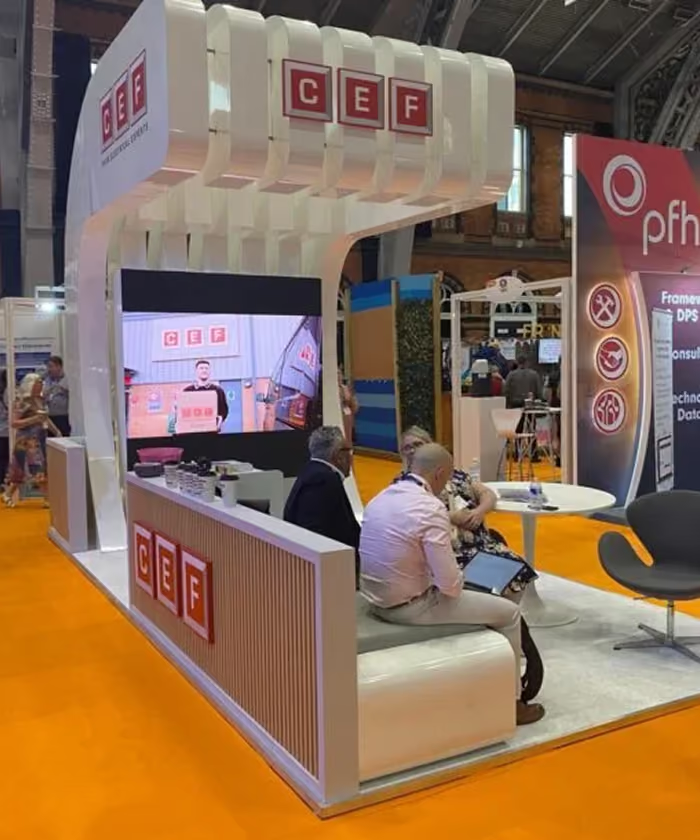
Booking exhibition space usually means picking a size before you've designed anything, which is slightly backwards and the source of a lot of wasted budget. Book too small and your stand feels cramped and forgettable. Book too big and you pay for an empty floor that makes the stand look under-attended. Getting the size right is about matching the space to what you actually need to do at the show, and here's how to work that out before you commit.
Start With Your Objectives, Not the Floor Plan
The size you need follows directly from what you want the stand to achieve. A stand whose job is to raise awareness and hand out literature can work hard in a small footprint. A stand that needs to host private meetings, demonstrate large products or seat a sales team through back-to-back conversations needs considerably more room.
Write down what has to happen on the stand across the show. How many staff will work it at once? How many visitors do you want to hold at peak times? Do you need a closed meeting room, a demo area, a storage cupboard, a coffee point? Each of those takes floor space, and adding them up gives you a far more honest starting figure than picking a size that sounds impressive.
Count the Space Each Function Really Takes
People consistently underestimate how much room the working parts of a stand eat up. A small meeting table with four chairs needs a surprising amount of clearance once people can actually pull the chairs out and walk behind them. A product plinth needs space around it for a crowd to gather without spilling into the aisle. Storage, however unglamorous, has to come from somewhere.
Leave Room to Move
As a rough guide, once you've accounted for your displays, meeting areas and storage, you want a good portion of the plot left as open circulation space so visitors can move around comfortably. A stand packed to its edges feels claustrophobic and pushes people straight back out. Give the working elements their space, then protect the room between them.
It helps to draw the plot to scale and place each element on it before you commit. Seeing the meeting area, the demo point and the walkways laid out on paper makes it obvious very quickly whether everything fits or whether you're asking a small plot to do a large plot's job.
Think About Your Neighbours and Position
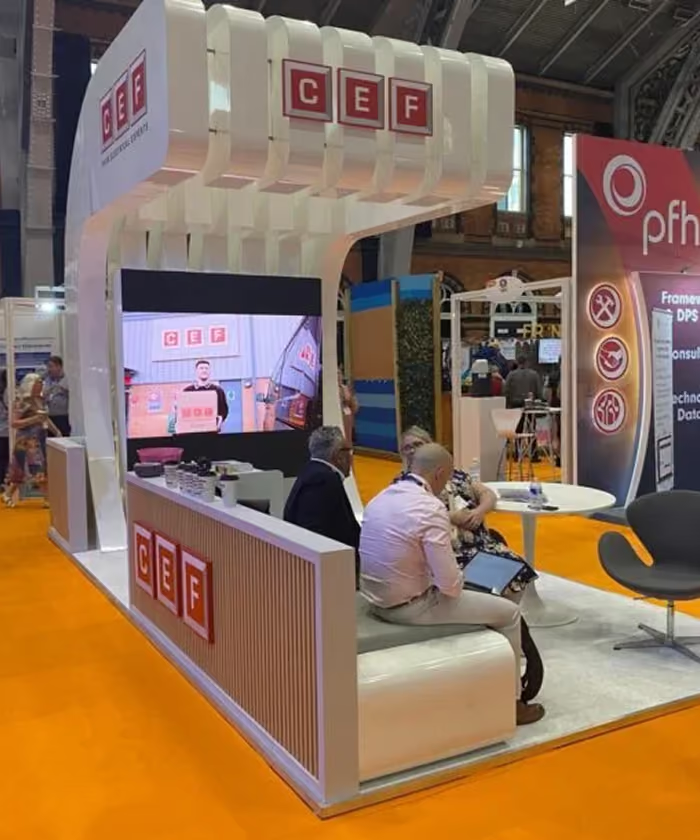
Size never works in isolation. A modest stand on a corner plot, open on two sides, can feel far larger and busier than a bigger inline stand hemmed in by neighbours on three sides. Before you fix a size, look at what's around your plot and how visitors will approach it. The organiser's floor plan will tell you which sides are open, where the main walkways run and which neighbours are likely to draw a crowd of their own.
Open Sides Change Everything
An open edge is worth more than raw square metres. Two or three open sides multiply your entry points and make the whole stand feel accessible, which often means you can achieve your goals on a smaller, better-positioned plot than on a larger, more enclosed one.
Watch the Height Allowance
Floor area is only half the picture. Many halls allow you to build upward, and a taller structure on a compact footprint can command far more attention than a low-slung stand twice its size. If your budget is tight on floor space, check the height rules for your plot, because vertical space is sometimes the cheaper way to stand out.
Match the Size to Your Stand Format
Size and format are part of the same decision, so it's worth working them out together. Modular systems are built to standard dimensions and scale neatly up or down, which makes them forgiving if your space changes between shows. A fully custom build can be designed to any footprint, which suits a distinctive shape or an unusual plot. Working out choosing the right exhibition stand type alongside your size decision stops you committing to a footprint that your preferred format can't fill well.
There's a budget angle here too. A large stand built to a basic modular spec might cost less than a smaller custom one with a premium finish, so the size that fits your money depends heavily on how you plan to build. Decide the two together, so you don't lock in a size your chosen format can't fill well.
Leave Room to Grow, Within Reason
If you exhibit at the same shows year after year, it's worth thinking a season or two ahead. Jumping wildly in size each year makes it hard to reuse elements and build a recognisable presence, so many exhibitors settle on a size band they can grow into gradually. That said, don't book space you can't yet fill. An oversized stand with too little happening on it reads as quiet, and a quiet stand does more damage to how you're perceived than a small, busy one ever could. Grow into a bigger footprint when your activity and staffing can genuinely fill it, and not before.
Get the Size Assessed Against a Real Design
The safest way to size a stand is to sketch the design at a couple of different footprints before you book, so you can see for yourself what actually fits before you commit. That's a quick job for an experienced builder and it removes almost all the risk from the decision.
We design and build stands across every size band, from compact shell schemes to large custom spaces, and because we handle the whole thing in-house, we can show you honestly what each size buys you before you sign for the floor. Tell us which show you're eyeing and what you need the stand to do, and we'll help you pick a footprint that earns its cost.