B
Office Relocation vs Office Fit-Out: Choosing the Best for Your Business
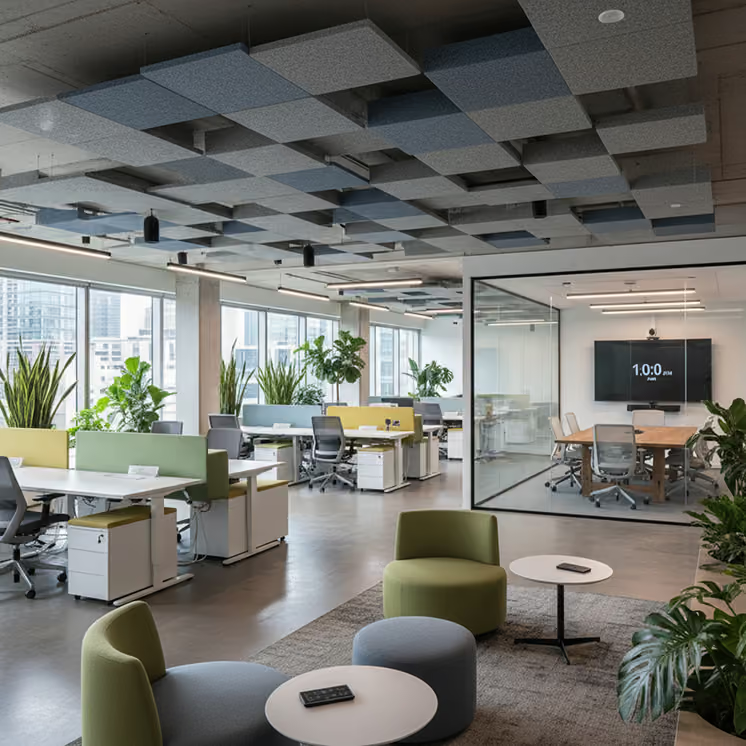
At some point most growing businesses hit the same fork in the road. The current office no longer works, and the question becomes whether to move somewhere better or transform the space you already have. Both can solve the problem, and both carry costs and disruptions that are easy to underestimate. The right answer depends on your lease and on how far your current space is from what you actually need. Here's how to weigh the two honestly.
What Each Option Really Involves
An office relocation means finding new premises, negotiating a lease, fitting out the new space and physically moving your business into it. A fit-out means staying put and reworking your existing office, from a light refresh to stripping the space back and rebuilding the layout around how you work now.
The two overlap more than people expect, because a relocation almost always includes a fit-out at the other end. Very few new offices arrive ready to move into as they are. So the real comparison is between fitting out your current space and fitting out a new one, with the cost and upheaval of moving added on top of the second option. Seeing it that way tends to reframe the whole decision, because it puts the true cost of moving in plain view.
When Relocation Makes Sense
Sometimes the building itself is the problem, and no amount of internal work will fix it. If you've genuinely outgrown the floor space, a fit-out can only rearrange what you have, not create more of it, so a move is the only real answer.
Location can force the decision too. If the office is in the wrong place for the staff you want to hire or the clients you want to impress, staying put keeps you stuck with that disadvantage however nicely you finish the interior. And if your lease is coming to an end anyway, the timing removes one of relocation's biggest obstacles, because you're not paying to exit early or negotiating your way out of a commitment. A natural lease break is often the cheapest moment you'll ever get to move, so it's worth planning around if a move is on the cards at all.
Count the Full Cost of Moving
Relocation costs reach well beyond the removal van. New rent and deposits, the fit-out of the new space, the reinstatement your old lease demands when you leave, new signage and stationery, IT reconfiguration and the productivity dip around the move all add up. Tally the whole picture before you decide, because the headline rent on a new building rarely tells the true story.
When a Fit-Out Makes Sense
If your location works and the building is fundamentally sound, a fit-out usually gives you more improvement for less money and less disruption. You keep the address your clients and staff already know, you avoid the cost and risk of moving, and you can shape the space precisely around how your teams work.
A fit-out also lets you stagger the work and stay operational, phasing the project so the business keeps running while each area is completed. That's often far less disruptive than the hard stop of a full relocation, where everything moves at once. For a business that can't afford a week of downtime, that ability to keep trading through the work can be the deciding factor on its own.
The Financial Case
There's a financial case as well. Reworking your existing space avoids the double cost of reinstating an old office and fitting out a new one, which is why a fit-out frequently comes in cheaper overall even when the building work itself looks significant on paper.
Ask These Questions First
The decision gets much clearer once you answer a few practical questions honestly. Does the current building have the space you'll need in two or three years, or are you already at its limit? Is the location genuinely working for your staff and clients, or quietly holding you back? How long is left on your lease, and what will it cost to leave early or to reinstate at the end? And how much disruption can the business realistically absorb right now?
Your answers usually point clearly in one direction. A business that's out of space or stuck in the wrong location is looking at a move. One whose only real issue is a tired or badly arranged interior is looking at a fit-out. The cases that need real thought are the ones in between, where the building could just about stretch to future needs, and that's exactly where an outside opinion earns its keep.
Where Refurbishment Fits In
There's a third option that sits between the two, and it's worth understanding before you commit to either. A refurbishment updates and improves your existing space without the full teardown of a major fit-out, which can be the right call when the layout basically works and the space just feels dated. The office fit-out vs refurbishment distinction is worth getting straight early, because choosing the lighter-touch option where it'll do the job saves you money you'd otherwise spend rebuilding things that were fine.
Talk It Through Before You Commit
This is a decision worth testing against experience before you sign anything, because the costs that catch people out are the ones that don't show up until the project is under way. A partner who does both moves and fit-outs can look at your situation without a bias toward either and tell you which genuinely serves you better.
We deliver office fit-outs and relocations, along with the refurbishments that sit between them, with an in-house team built on sixteen years of live events work, where deadlines don't move. That means we can weigh up your current space and your budget against what you actually need, then give you a straight answer on whether to move or improve. Tell us where you are and where you're trying to get to, and we'll help you choose the route that fits.