B
The Importance of Stage Design for Corporate Events

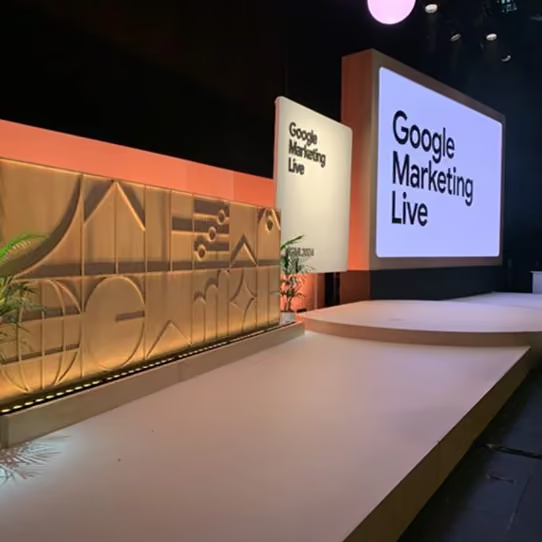
Ask people what they remember about a conference a month later and they rarely quote the slides. They remember how the room felt, whether the speakers looked the part and whether the whole thing seemed professionally run or thrown together. The stage carries most of that impression. It's the focal point every delegate faces for hours and the frame around every photo and clip that leaves the room, which makes stage design one of the decisions that most shapes how the whole event is received. Here's why it matters and what separates a stage that works from one that just about does the job.
The Stage Sets the Tone Before Anyone Speaks
Delegates form a judgement about your event in the first few seconds, long before the opening speaker has said anything. A considered stage, well lit and clearly branded, tells them they're somewhere the organisers have taken seriously. A bare backdrop and a lectern borrowed from the venue store tells them the opposite, and that impression colours how they receive everything that follows.
This matters most when the audience is one you're trying to impress. Clients, investors and senior staff read the production values as a signal of how the organisation does everything else. Getting the stage right isn't vanity, it's setting the frame the whole day is judged within. The reverse is also true: a genuinely good event let down by a cheap-looking stage tends to be remembered as smaller than it was, because the visual cues told a different story from the content.
Good Design Keeps Attention Where You Want It
A stage does practical work as well as making an impression. Its job is to hold a room's attention on the speaker for hours, which is harder than it sounds when people have phones in their pockets and inboxes on their minds.
Guiding the Eye
Thoughtful design uses height, lighting and layout to draw every eye to the person speaking. A raised platform lifts the speaker above the seated crowd so people at the back can see. Focused lighting separates them from the backdrop. A screen placed at the right height and angle means nobody strains to read it. Each choice removes a small reason for attention to wander. On their own these adjustments sound minor. Added together across a full day, they are the difference between a room that stays with the speaker and one that quietly drifts to its phones by mid-afternoon.
Designing for Every Seat
A stage that looks perfect from the third row can fail the people at the sides and the back. Sightlines have to be checked from the edges of the room as well as the centre, so that a badly placed lectern or screen doesn't leave a third of the audience craning. This is the kind of detail that separates a stage designed by someone who has watched real audiences from one that only ever existed on a screen.
The Stage Is Your Most-Shared Asset
Modern corporate events live on well beyond the room. Sessions get filmed, streamed and cut into clips for social channels, and the stage is in shot for all of it. A strong stage design keeps your branding visible in every frame and makes the footage look polished enough to be worth sharing. A weak one means every clip quietly undersells the event to the far larger audience watching later. Given how many more people see the recording than attend in person, that reach is worth designing for deliberately.
If you know your event will be filmed, the stage should be designed for the camera as much as the room. Colours that read well on screen, branding positioned where the lens will catch it and lighting that flatters both speaker and backdrop all make the difference between recordings you're proud to circulate and ones that sit unused.
Flexibility Matters for Multi-Session Events
A conference with a single keynote needs one strong look. A day packed with panels, presentations, awards and breakout sessions needs a stage that can shift between them without a full rebuild between slots. This is where a well-planned design earns its budget, built from modular scenery, with lighting and screen content that change to suit each session while the underlying set stays put.
Planning this in advance keeps the day running to time, because the transitions are built into the design, so nothing has to be improvised on the day while an audience waits. A stage that changes cleanly between sessions also signals competence to the room, since delegates notice when things run smoothly even if they couldn't say why.
Where to Start With Your Own Stage
The best stage designs begin with the content and the room, not a look pulled from a brochure. Start from your running order and the room you're working in, and let the design follow from there. Gathering a few corporate stage design ideas at that early stage helps you picture what's possible and gives you a shared reference to brief against, so the conversation with your supplier starts from something concrete.
Work Within the Room's Limits
From there, the practical constraints shape the rest. Ceiling height, rigging points, power and get-in times all affect what can be built, which is why an early site assessment saves money and prevents nasty surprises close to the event. Booking that walkthrough weeks ahead also gives you time to adjust the design if the venue throws up a limitation, well before the get-in.
Put the Budget Where It Shows
Budget deserves the same early attention. Deciding roughly what the stage is worth to you up front lets a good designer put the money where the audience actually looks, which is usually the lighting and the central backdrop, and hold back on the parts nobody sees.
We design, build and install stage sets for corporate events across the UK and the UAE, handling the scenery, lighting, screens and rigging as one job with our own team. Send us your venue and your running order, and we'll come back with a stage design that fits the room and the schedule and leaves the impression you're after.