B
How to Choose the Right Backdrop for Your Corporate Event

Your backdrop is the most photographed element of any corporate event. It sits behind every speaker, appears in every livestream frame and forms the background of every delegate photo that ends up on LinkedIn. Get it right and your branding travels far beyond the room. Get it wrong and every image from the day carries the evidence. Here's how to make the decision well.
It helps to think of the backdrop as the one design choice that keeps working after everyone's gone home. The catering is eaten, the stage is cleared, but the photos and the footage carry your brand for months. That's a lot resting on a decision people often leave until late, so it pays to give it proper thought early.
Start With How the Event Will Be Seen
Before you compare materials or prices, answer one question: where will this backdrop actually be viewed from? An awards dinner seen only by the people in the room has different requirements from a conference being filmed for broadcast, and both differ again from a product launch built to generate social content.
Design for the Camera First
In-person viewing is forgiving. Camera lenses are not. Fine patterns can shimmer on video, glossy surfaces throw reflections under stage lighting, and small logos that read fine from the front row disappear entirely on a wide shot. If your event is being filmed or streamed, design the backdrop for the camera first and the room second, because far more people will see the footage than saw the stage.
Picture the Final Shot
It's worth picturing the final photo before you approve anything. If you know your event will be shot from a fixed camera position at the back of the room, you can design for that exact frame, making sure your branding lands where the lens will catch it rather than drifting off to the edges.
Match the Format to the Job
Corporate backdrops come in a handful of formats, each with a use case worth knowing.
Printed fabric and tension systems are lightweight, crease-resistant and quick to install, which makes them the sensible pick for single-day events in hired venues with tight access windows. Print quality on modern dye-sublimation fabric is excellent, and the material packs down small enough to reuse across a whole season of events.
Hard-Panel and Set-Built
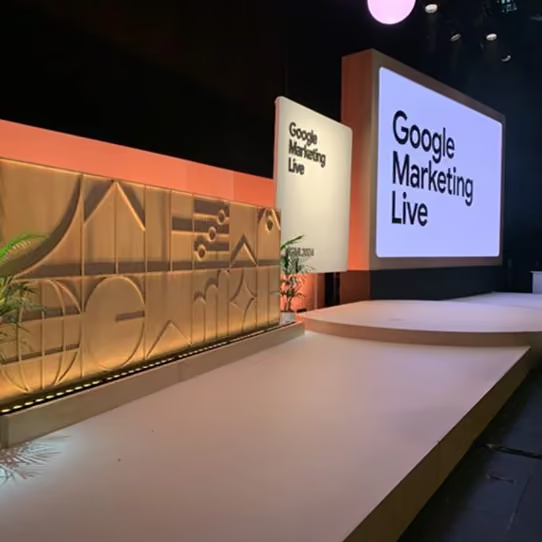
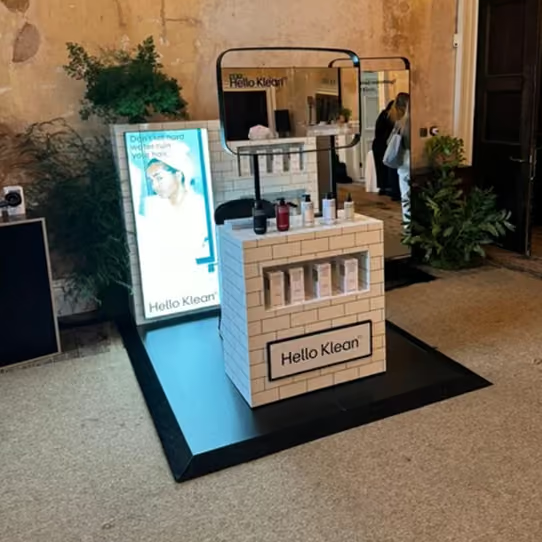
Hard-panel and set-built backdrops are where premium events live. Built from timber, metal and printed or painted panels, they hold perfectly flat surfaces, support integrated lighting and let you add dimensional elements like raised logos, textured finishes and recessed screens. They cost more and take longer to install, and they photograph like a broadcast studio.
LED and Screen-Based
LED and screen-based backdrops swap print out for moving content entirely. They carry the highest cost, and they earn it at events where your content needs to change through the day, like multi-speaker conferences where each session brings its own branding.
Step-and-repeat boards still have their place at entrances and photo moments, but as a main stage backdrop they tend to signal budget rather than brand. If your event is the kind where senior clients or press will be in the room, it's usually worth stepping up a format.
Scale It to the Room, Not the Artwork
The most common backdrop mistake is sizing it from the artwork file rather than the venue. A three-metre backdrop that looked generous on screen becomes a postage stamp behind a lectern on a six-metre stage, with a bare wall showing on camera either side.
Size From the Stage, Not the Screen
Work from your stage dimensions and the widest camera angle. The backdrop should fill the full frame behind your speakers, with enough height that a standing presenter never breaks the top edge on video. In most conference venues that means at least three metres high, and wide-format stages often need six metres or more of continuous coverage. Ceiling height, rigging points and floor loading all affect what's achievable, which is why a site visit before you finalise the design saves you money and grief in equal measure.
Design for the People In Front of It
Your backdrop never appears empty. It appears behind presenters, panellists and award winners, so the design has to work around them.
Keep the centre of the backdrop calm, because that's where people stand. Put your logos and key messaging in the upper third and towards the edges, where they stay visible over shoulders and beside heads on camera. Avoid text at head height in the middle of the design, or every photo from the event will feature a speaker wearing your strapline as a hat.
Get the Colour Right
Colour deserves the same thought. Deep, saturated tones read as premium under stage lighting and make skin tones pop on camera, while pure white surfaces flare under bright lights and force the camera exposure down. If you're unsure, test the artwork under real lighting conditions rather than signing it off on a laptop screen.
Plan for Panels and Groups
Think about repetition too. If you're running a panel with four people seated across the stage, a single central logo will end up hidden behind the middle chair. A pattern that repeats your branding across the full width keeps you visible whoever is on stage and wherever the camera cuts.
Plan the Practicalities Early
Backdrops fail at the logistics stage more often than the design stage. Venue access times, freight lift dimensions, rigging restrictions and fire certification all shape what you can actually install, and finding out about a constraint on the day is expensive. Any structure needs certified flame-retardant materials, and most venues will ask you for the paperwork.
Factor In Build Time
Build time matters too. A tension fabric system goes up in an hour. A built set with integrated lighting might need a full day, which affects your venue hire and crew costs. A supplier who installs its own work, like we do, can compress these timelines, because the people who built the set are the people standing it up. It also means that if something needs adjusting on site, the team who made it is right there to sort it rather than a phone call away.
Steal Some Ideas Before You Commission One
The fastest way to brief a backdrop well is to turn up with references. Collecting a few conference stage backdrop ideas beforehand, from layered set pieces to full LED stage walls, makes it far easier to tell your supplier what you're after and to match the look to your event and budget.
We design, build and install event backdrops and stage sets across the UK and the UAE. Send us your venue, date and a rough idea of the moment you want to create, and we'll come back with options and honest pricing.